Transition Playlist from Warmup to Cooldown Guide
Transition Playlist from Warmup to Cooldown Guide

A transition playlist from warmup to cooldown is a sequenced music program that matches tempo and energy to each phase of your workout, from gentle activation through peak intensity to full recovery. Most fitness enthusiasts and dancers build playlists by feel, which produces jarring tempo jumps that disrupt pacing and break focus. The smarter approach treats BPM as a physical constraint, not a suggestion. Platforms like Spotify and Apple Music both support crossfade and AutoMix features that make this kind of structured workout playlist transition far easier to execute than most people realize.
What are the optimal BPM ranges for warmup, peak workout, and cooldown?
The BPM range you choose for each workout phase directly controls how your body responds to the music. Rhythmic entrainment is the mechanism at work: your body naturally synchronizes movement to an external beat, which means the wrong tempo actively works against your pacing rather than supporting it.
Warmup music generally falls between 90 and 110 BPM. That range is wide enough to cover a brisk walk, light dynamic stretching, or a slow dance warm-up, while still keeping your heart rate from spiking before your muscles are ready. A standard HIIT warmup runs five minutes at 100 to 120 BPM, which gives you two to four tracks depending on song length.
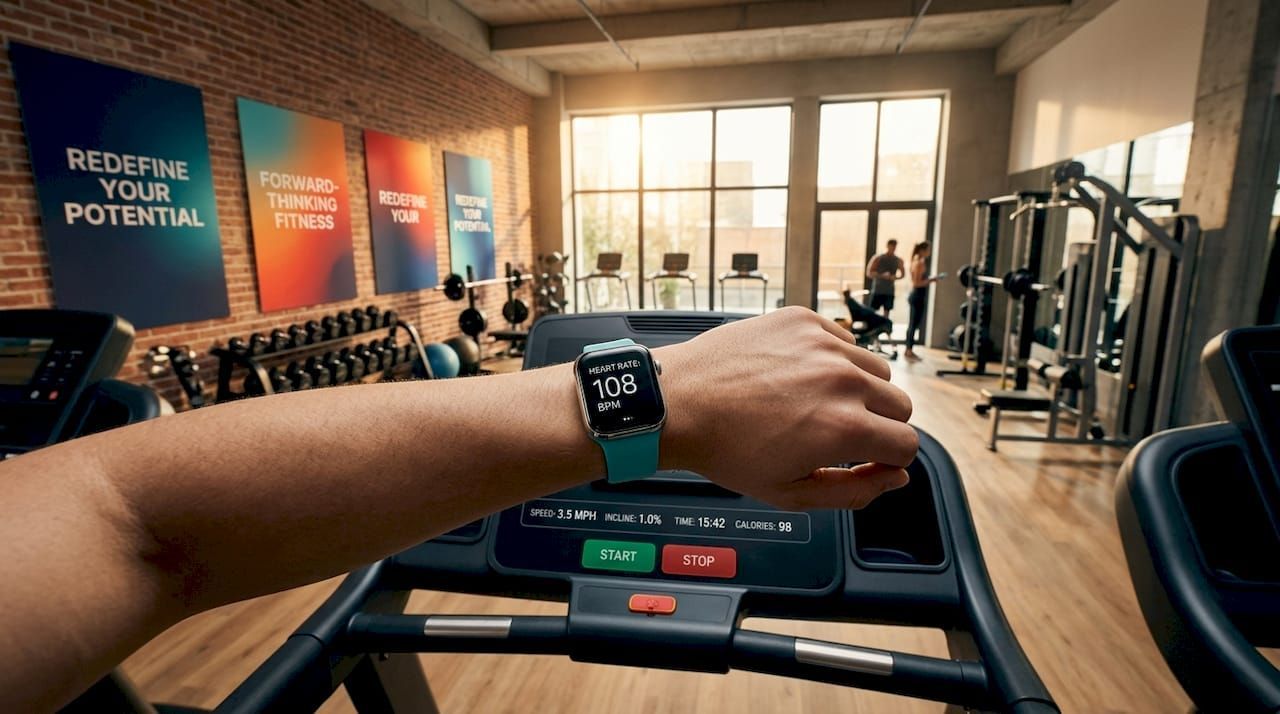
Peak workout BPM sits between 140 and 180 for high-intensity formats like HIIT, spin, or high-energy dance. For moderate cardio or strength training, 120 to 140 BPM is more appropriate. The key is that your peak phase should feel relentless but not chaotic. Three to six tracks at consistent BPM builds the sustained drive that carries you through the hardest intervals.
Cooldown music selection is where most playlists fall apart. Dropping from 160 BPM straight to a 70 BPM ambient track shocks the nervous system instead of easing it down. Effective cooldown tracks sit between 50 and 90 BPM, with yoga-style floor work and savasana dropping as low as 50 to 65 BPM for full recovery. Plan three to five tracks for a 10 to 15 minute cooldown window.
| Phase | BPM Range | Track Count | Example Format |
|---|---|---|---|
| Warmup | 90–110 BPM | 3–5 tracks | Dynamic stretch, light cardio |
| Build | 110–140 BPM | 2–3 tracks | Moderate cardio, dance warm-up |
| Peak | 140–180 BPM | 4–6 tracks | HIIT, spin, high-energy dance |
| Transition down | 110–130 BPM | 2–3 tracks | Active recovery, slow dance |
| Cooldown | 50–90 BPM | 3–5 tracks | Stretch, yoga, floor work |
Pro Tip: Tag every track in your library with its BPM before you build a playlist. Apple Music and Spotify both display BPM in track details, and free tools like Tunebat or BPM Analyzer let you batch-tag your own files.
How to create smooth musical transitions between playlist phases
Smooth transitions are the difference between a playlist that feels professionally curated and one that sounds like a shuffled queue. The core rule is simple: limit BPM jumps between adjacent tracks to no more than 8 to 12 BPM. Anything larger creates a perceptible lurch that pulls your attention away from the workout.
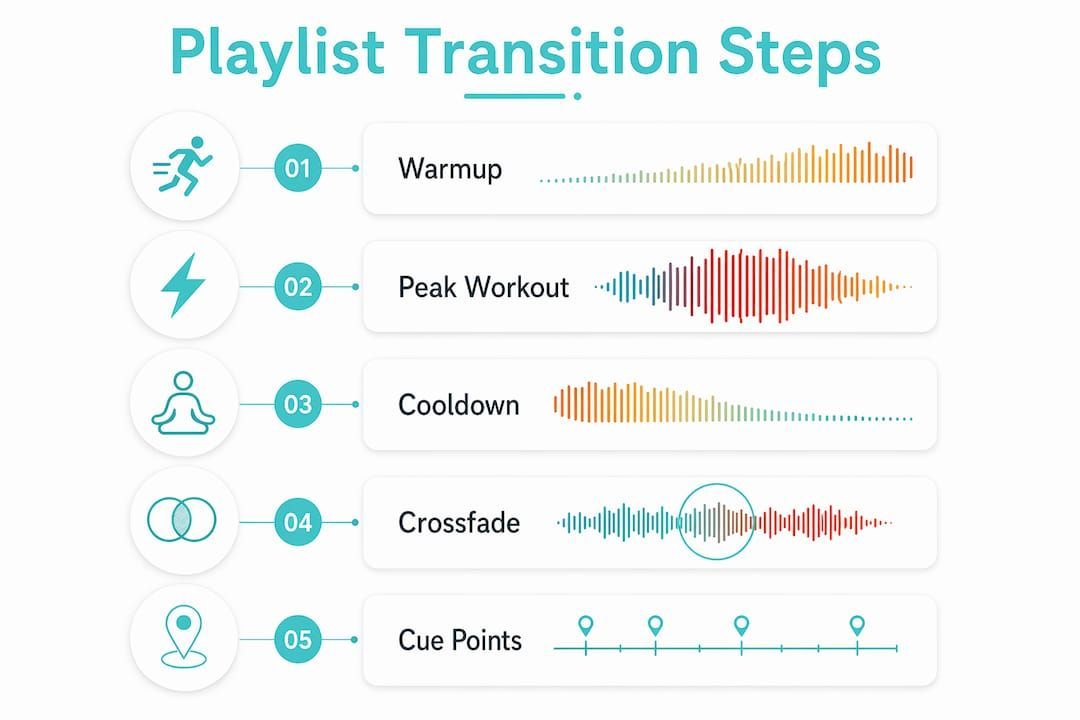
Here is a step-by-step process for building transitions that hold up at full workout volume:
- Sort your tracks by BPM. Group them into the five phases from the table above. Never place a 160 BPM track directly before a 90 BPM track without at least two bridge tracks between them.
- Use crossfade on every phase boundary. Apple Music's AutoMix and Crossfade settings let you set fade times between two and six seconds. Use shorter fades (two to three seconds) for sustained runs where you want energy to carry through, and longer fades (four to six seconds) at the warmup-to-peak and peak-to-cooldown boundaries.
- Anchor transitions to musical phrase points. Tracks are built on 8, 16, and 32-bar phrases. Cueing a new track at the start of a phrase rather than at a random timestamp makes the switch feel intentional. This matters most for dancers, who feel phrase breaks in their bodies.
- Match keys where possible. Two tracks in compatible keys (relative major/minor, or a fifth apart) blend without harmonic clashing. Tools like Mixed In Key analyze your library and assign Camelot wheel codes that make key-compatible sequencing fast.
- Reduce conflicting low frequencies at phase changes. When switching from a bass-heavy peak track to a lighter cooldown track, a brief EQ fade on the outgoing bassline prevents the muddiness that makes transitions feel abrupt.
- Insert a bridge track at major energy shifts. A single 90-second instrumental or low-vocal track at 115 BPM between your peak and cooldown phases acts as a pressure valve. It gives your heart rate permission to start dropping before the full cooldown begins.
Pro Tip: For instructor-led classes, place cue-safe transition moments at phase changes. A short low-instrumental bridge gives you a clean window to call out the next exercise or breathing cue without competing with a heavy drop.
What factors to consider when selecting songs for warmup and cooldown phases
BPM is the skeleton of a good playlist, but song selection is the muscle. Two tracks at identical BPM can produce completely different physical and emotional responses depending on instrumentation, lyrical density, and energy arc.
Consider these factors when choosing warmup and cooldown tracks:
- Emotional resonance over tempo alone. Self-selected favorite songs improve endurance and motivation even when their BPM is similar to less-preferred tracks. This means your warmup and cooldown tracks should feel personally meaningful, not just technically correct.
- Instrumentation for cooldown. Cooldown music selection works best with softer textures: acoustic guitar, piano, ambient pads, or stripped-back vocal house. Heavy synth basslines and distorted guitars keep the nervous system activated even at low BPM. Deep vocal house, for example, delivers emotional warmth without the sonic aggression that blocks recovery.
- Lyrical density and cognitive load. Dense, fast-paced rap or spoken-word tracks demand cognitive processing that competes with physical focus during warmup. Save lyric-heavy tracks for mid-workout where the energy supports them. Cooldown tracks with minimal or melodic vocals let the mind settle alongside the body.
- Genre mapping by phase. Soul, R&B, and mid-tempo pop work well for warmup. Electronic dance music, hip-hop, and high-energy pop carry peak phases. Ambient, deep house, neo-soul, and acoustic tracks serve cooldown best.
- Energy arc within the track itself. A song that builds from quiet to explosive is a natural warmup track. A song that fades from intensity to calm is a natural cooldown track. Matching the internal arc of a song to its playlist position doubles the effect.
- Personal library depth. Build a tagged library of at least 30 to 50 tracks per phase so you can rotate playlists without repeating the same sequence every session. Repetition kills motivation faster than a bad BPM choice.
How to test and refine your transition playlist for workout effectiveness
Building the playlist is only half the work. Testing it at real workout conditions reveals problems that silent preview listening never catches.
- Play it at workout volume on your actual device. Testing at intended playback volume exposes transition artifacts, volume mismatches between tracks, and crossfade lengths that feel too short or too long when you are breathing hard. A transition that sounds smooth through headphones at your desk may feel abrupt through a gym speaker at 80 decibels.
- Check BPM continuity across the full arc. Run through the playlist and note any point where your movement instinctively wants to change pace before the track does. That is a sequencing problem, not a fitness problem.
- Log your self-assessment after each session. Note which transitions felt smooth, which tracks felt misplaced, and whether the cooldown actually brought your heart rate down. Three to four sessions of honest feedback gives you enough data to make targeted edits.
- Watch for jarring lyric entries. A track that opens with a loud vocal hook immediately after a quiet fade-out is a common disruption point. Preview the first four bars of every track in context with the one before it.
- Rotate playlists seasonally or by workout type. A playlist built for summer HIIT sessions will feel wrong in a winter yoga flow. Treat your playlists as living documents that evolve with your training cycle, not permanent fixtures.
"The best workout playlist is the one you forget you're listening to. When the music disappears into the movement, the sequencing is working."
Key takeaways
A well-structured transition playlist from warmup to cooldown uses BPM sequencing, crossfade technique, and deliberate song selection to keep your body and mind aligned with every phase of your workout.
| Point | Details |
|---|---|
| BPM drives physical response | Match warmup to 90–110 BPM, peak to 140–180 BPM, and cooldown to 50–90 BPM. |
| Limit tempo jumps | Keep BPM changes between adjacent tracks within 8 to 12 BPM to prevent jarring shifts. |
| Use platform crossfade tools | Apple Music's AutoMix and Crossfade settings make phase transitions audibly smooth. |
| Song feel matters beyond BPM | Emotional resonance and instrumentation affect recovery and motivation as much as tempo. |
| Test at real conditions | Play your playlist at workout volume on your actual device before committing to a session. |
Why I stopped building playlists by feel
Most fitness playlists are built backwards. People pick songs they love, arrange them by gut instinct, and then wonder why their cooldown feels rushed or their warmup never quite lands. I spent years doing exactly that before I started treating BPM as a hard constraint rather than a loose guide.
The shift that changed everything for me was anchoring transitions to musical phrases rather than track boundaries. When you cut to a new song mid-phrase, the body feels it even if the mind does not register why. For dancers especially, phrase-based transitions are not optional. They are the difference between choreography that flows and choreography that fights the music.
The other thing most guides skip: cooldown music is not just slow music. It needs to be emotionally resolved. A track that is 70 BPM but harmonically tense or lyrically anxious does not help your nervous system settle. Deep vocal house works so well for cooldown precisely because it carries emotional warmth without sonic aggression. The voice grounds you, the tempo slows you, and the production does not demand anything from you.
Build your playlists as living documents. The sequence that works for a 45-minute HIIT session will not work for a 90-minute dance rehearsal. Revisit, retag, and rebuild every few months. The playlist that grows with your training is always more effective than the one you set and forget.
— Kotton
Discover curated workout music from 100kotton

Finding quality tracks that actually work across every workout phase takes time most people do not have. 100kotton solves that problem with two hours of original deep vocal house music, including both released and unreleased tracks, built specifically to move with you through home sessions, gym workouts, and dance rehearsals. Every track is crafted to function as more than background noise. If you are ready to stop guessing at BPM and start feeling the difference a curated workout playlist makes, explore what 100kotton has built for you.
FAQ
What BPM should warmup music be?
Warmup music works best between 90 and 110 BPM to gradually raise heart rate without spiking intensity too early. A standard five-minute warmup typically covers two to four tracks in this range.
How do I transition between workout playlist phases smoothly?
Keep BPM jumps between adjacent tracks within 8 to 12 BPM, use crossfade settings of two to six seconds, and cue new tracks at musical phrase points rather than random timestamps.
What makes good cooldown music selection?
Effective cooldown tracks sit between 50 and 90 BPM and use soft instrumentation like piano, acoustic guitar, or ambient pads. Emotionally resolved, low-lyric tracks help the nervous system settle alongside the body.
Can I use Spotify or Apple Music for workout playlist transitions?
Yes. Apple Music offers AutoMix and Crossfade features that automate smooth transitions between tracks. Spotify also supports crossfade in its settings, making both platforms practical tools for structured workout playlists.
How often should I update my transition playlist?
Rotate or rebuild playlists every one to three months, or whenever you change your workout format. A playlist built for HIIT will not serve a yoga or dance session equally well, so treat it as a document that evolves with your training.